Pyotr Ilyich Tchaikovsky
-
It's been a while but it's time for #EuropeanBios entry #76, Pyotr Ilyich Tchaikovsky. Born in 1840 in Russia, he was a famous composer, drama queen, self-loathing homosexual, and all around nice guy. "Tchaikovsky" uses a lot of characters so I'll be calling him Pete a lot.
-
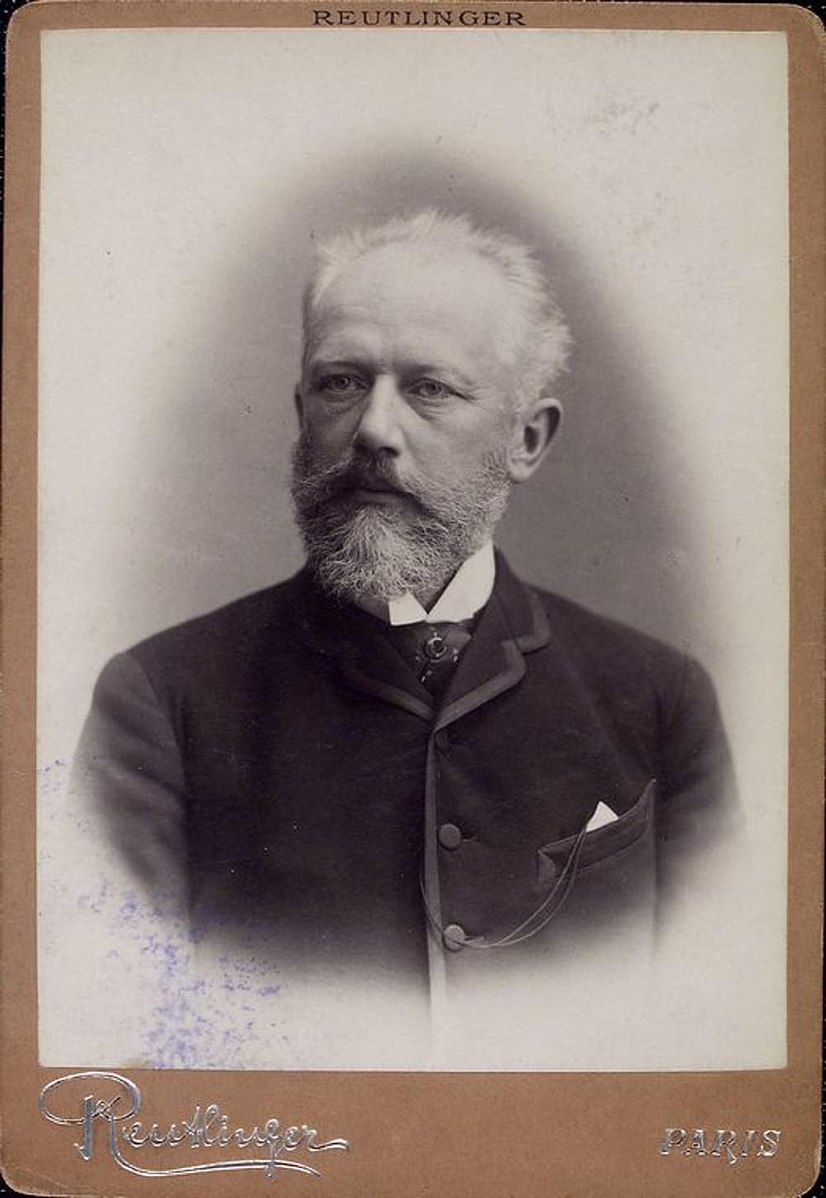
Photograph of Pyotr Ilyich Tchaikovsky, taken by the Reutlinger studio in Paris Photograph of Tchaikovsky by Reutlinger, public domain -
In this series I try to draw out connections between my subjects. Tchaikovsky's great-grandfather was a cossack called Fyodor Chaika who fought under our previous subject, Peter the Great:
-
But obviously the real connections for Pete Tchaikovsky are to his peers in the ranks of musical geniuses. Chief among them is Mozart. Pete adored Mozart, referring to him as "a musical Christ", "close to something that we call the ideal"
-
He was less charitable about most other artists. He referred to Brahms as "that giftless bastard", hated Bach and Handel, and thought Wagner was shit. He thought Beethoven's first two periods were fine but was not a fan of the latter third of his career.
-
But we're getting way ahead of ourselves. Pete was born into a large and apparently fairly wealthy family, rich enough that they could afford a family photograph in 1848. Pete is on the extreme left, looking not gay at all, his mother is next to him, and his father extreme right.
-
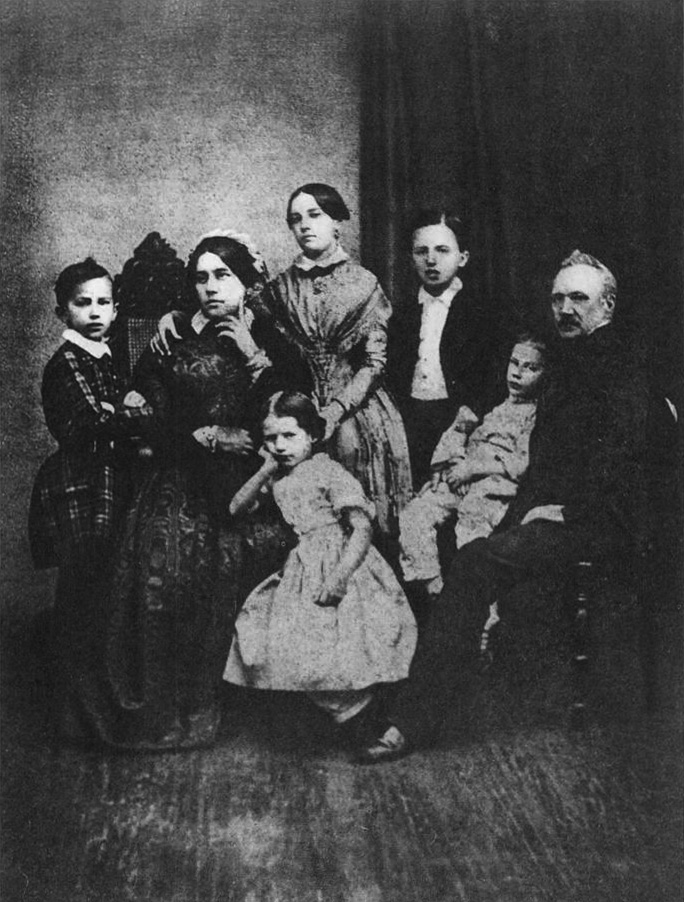
The Tchaikovsky family in 1848. Young Pyotr is on the far left, with his mother beside him and his father on the far right Tchaikovsky family photograph, 1848, public domain -
He was musical from an early age, getting piano lessons from the age of five and noted for his talent. He was also noted as a "sensitive" child, which apparently had the same meaning then as it did when I was growing up (gay), and was also anxious and neurotic.
-
Pete was extremely attached to his mother, Alexandra, so when he was sent to a boarding school over 800 miles away at the tender age of 10 it was a traumatic event for him. He was convinced he would never see her again and he was right: she died of cholera 4 years later.
-
If it sounds cruel to send a ten year old away from his parents for years at a time you're right, and the school was grim and Dickensian in its cruelty. Nevertheless, his teachers and classmates all remarked that he was an optimistic, happy, charming child, popular with everyone.
-
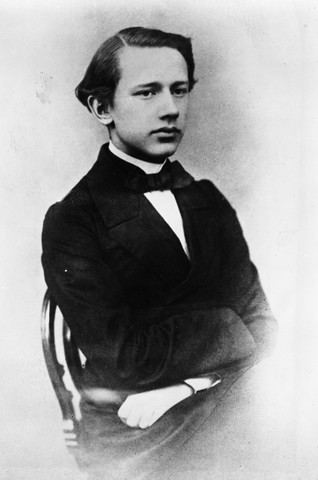
Photograph of young Pyotr Tchaikovsky, the charming and optimistic child his classmates remembered despite the grim boarding school Photograph of young Tchaikovsky, public domain -
There are just no photos of Tchaikovsky where he doesn't look gay, by the way. He just slowly evolved from twink to otter to daddy.
-
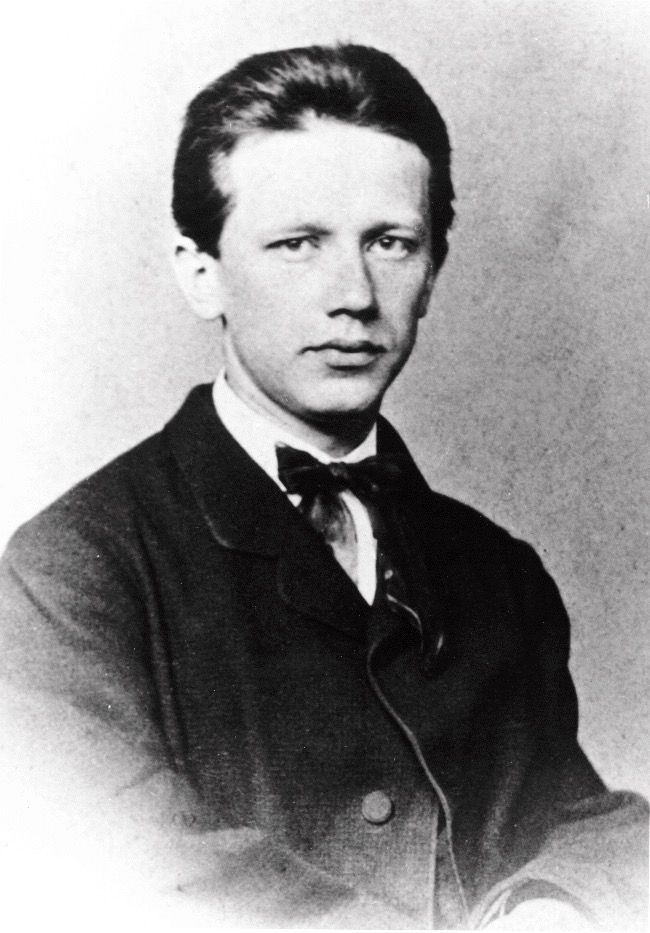
Tchaikovsky as a young man Photograph of Tchaikovsky, public domain -
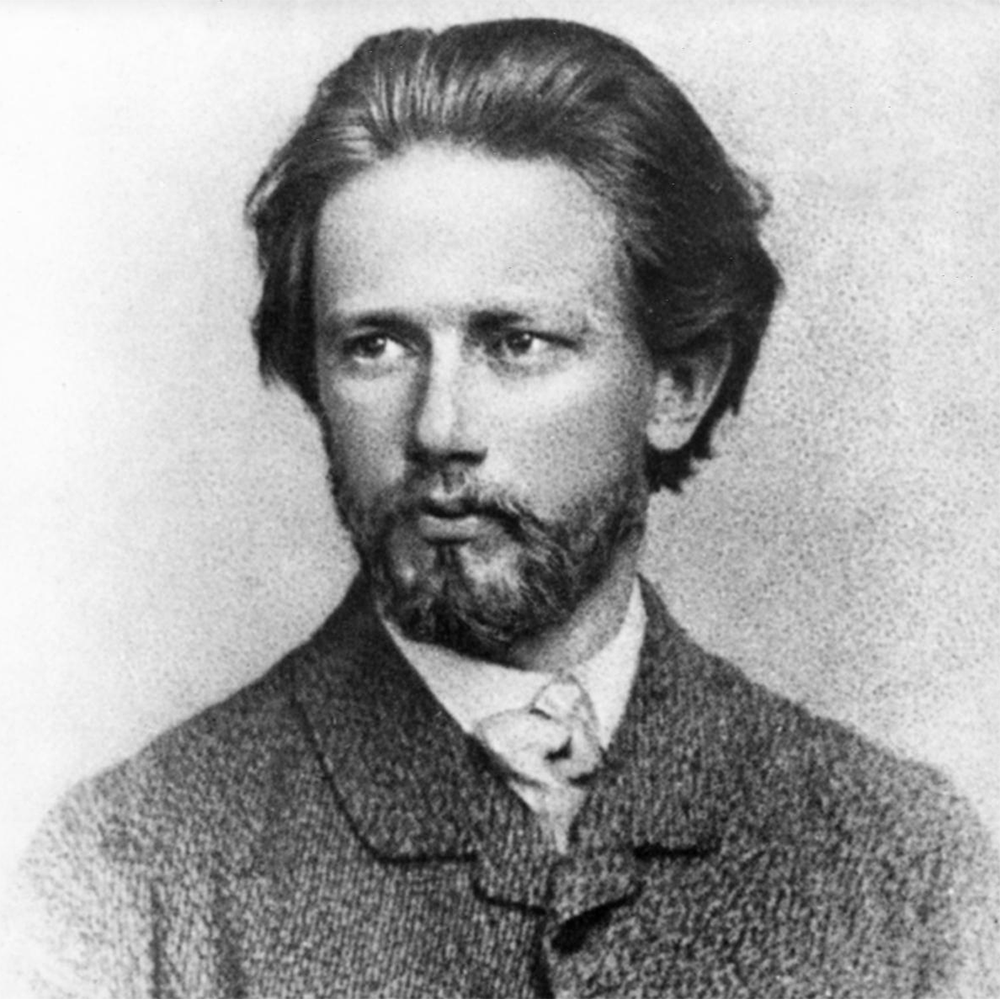
Tchaikovsky in middle age Photograph of Tchaikovsky, public domain -
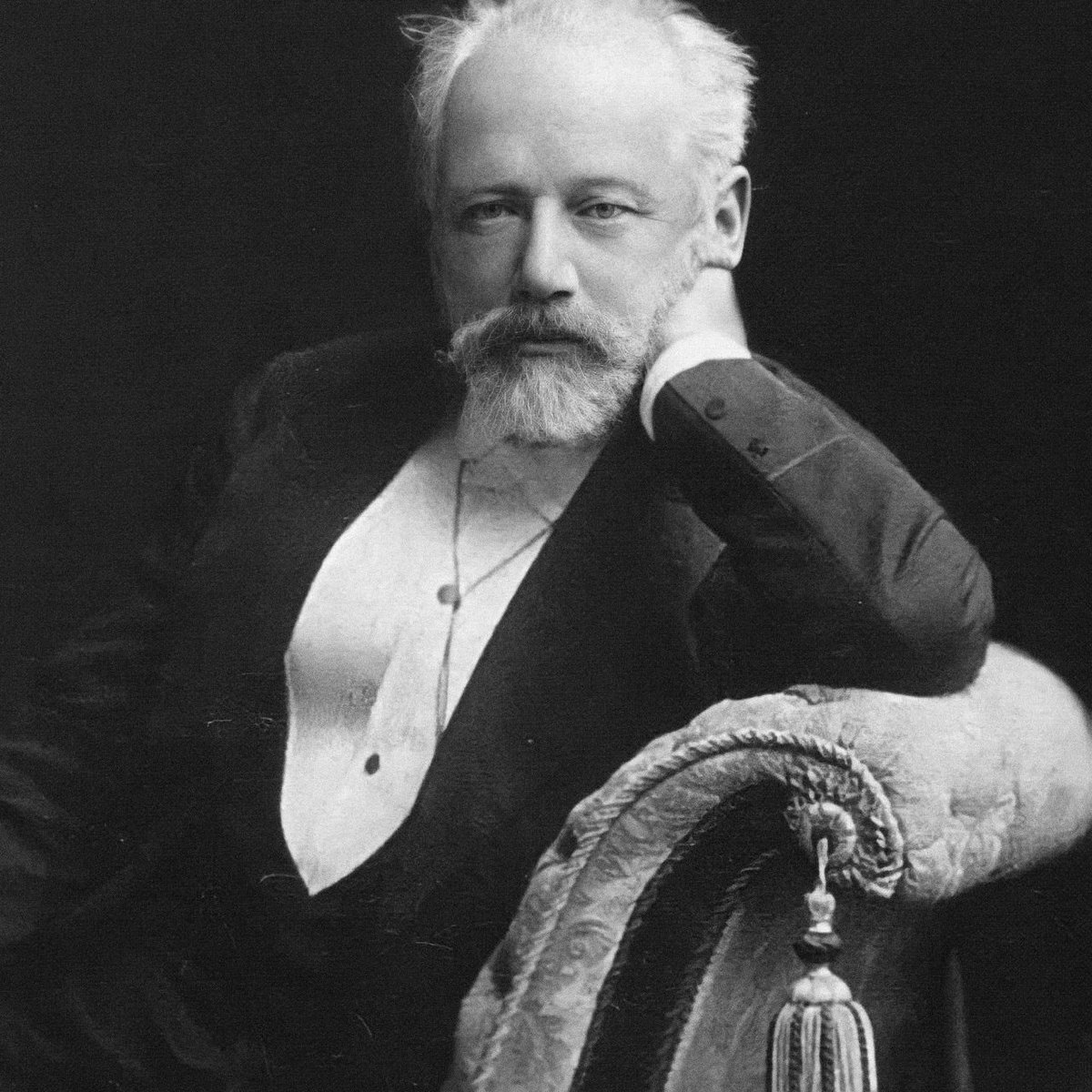
Tchaikovsky in later life Photograph of Tchaikovsky, public domain -
His popularity was nearly universal. His friends, his rivals, the people he worked with, the people he owed money to, even the people he fucked over were all unanimous that he was a really nice guy. Given how many of my subjects are total assholes, it was refreshing.
-
Pete's school prepared him to be a sort of civil servant, but his father was clear that a musical career was possible for him, and supported this goal financially, paying for private lessons. They expected he might be a talented performer; few thought he would compose.
-
When Pete was 22 a new school of music of opened, the Saint Petersburg Conservatory, and he joined its very first class. Here the depths of his talent were recognized and he gained the musical and professional skills, as well as connections, to become a professional composer.
-
This is a marked departure from our two previous musical subjects, Mozart and Beethoven. Mozart was always and primarily a performer: he was paid handsomely to perform his music because it was original, but being paid to *compose* music was unknown. He was paid to perform.
-
Beethoven was the transitional figure: in the first half of his life he too made money performing his music. Then he went deaf, and it became almost impossible to perform, but he continued to compose and was paid for the publishing rights to his music
-
Tchaikovsky was a composer right from the start, and very lucratively so. While Mozart, Beethoven and Pete were all notoriously bad with money, Mozart and Beethoven were constantly broke, while Pete was much less often in any serious financial straits, partly for this reason.
-
The other reason Tchaikovsky hardly ever worried about money is much weirder: a wealthy widow called Nadezhda von Meck became a fan of his work and then personally funded his life for more than a decade, sending him enormous an enormous annual sum, and more whenever he asked.
-
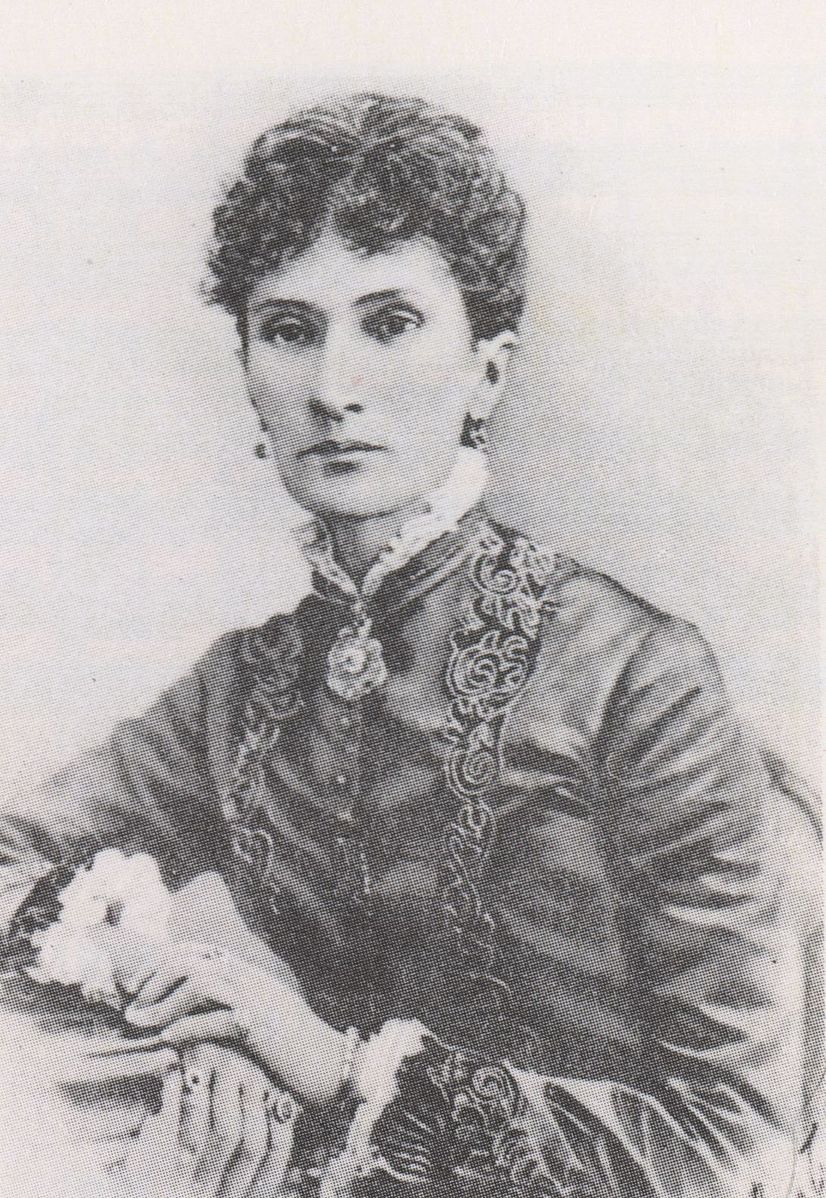
Nadezhda von Meck, the wealthy widow who personally funded Tchaikovsky's life for over a decade while insisting they never meet in person Photograph of Nadezhda von Meck, public domain -
Many artists have patrons, but what made it weird is that they never met. In fact, she insisted that they never meet in person. She invited him to her palatial estate to spend time, even to sleep in her bed, on the condition that she was not there at the time.
-
While staying at her estate they would occasionally see each other from a distance, but structured their routines to avoid meeting. On the one occasion he was early and she was late so they ended up meeting face to face. Startled, they left immediately without exchanging words.
-
Pete and Von Meck communicated entirely by letter, in a weird, chaste, faux love affair. Their letters are full of flamboyant declarations of passion, which apparently both felt safe to indulge in knowing they would never be required to follow through.
-
What Von Meck got out of this is unclear. Clearly she loved his work -- the relationship began with her commissioning specific pieces -- but the letters are certainly more than that. They exchanged more than 1,200 letters over 13 years, which are full of mutual emotional support.
-
Maybe it was enough for Von Meck to have a friend, especially such a talented one. They kept up their correspondence even when Tchaikovsky decided, disastrously, to get married at age 37 to delusional fan girl Antonina Miliukova, in an effort to disguise his homosexuality.
-
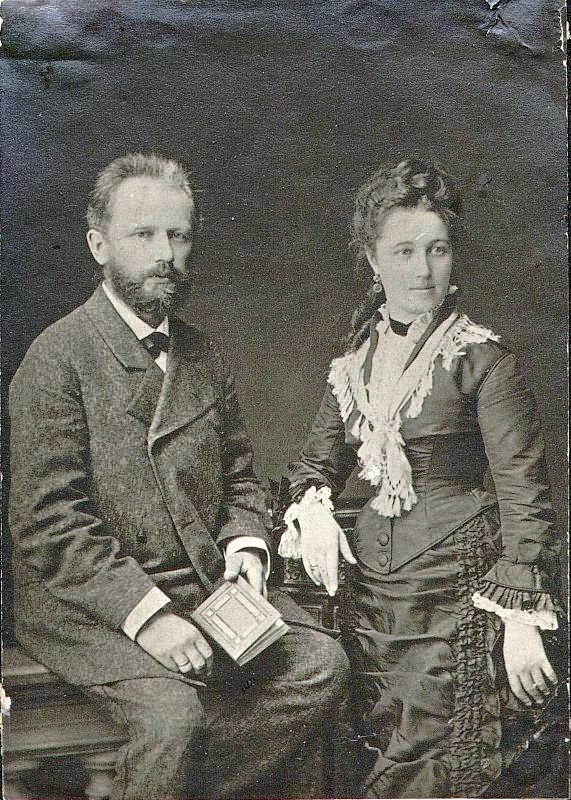
Tchaikovsky and his wife Antonina Miliukova, 1877, a marriage he entered into in an attempt to disguise his homosexuality that lasted only six weeks Photograph of Tchaikovsky and Antonina Miliukova, 1877, public domain -
Tchaikovsky was gay. Not "our culture has no word for it" or "maybe also had feelings for men" or "gay people hadn't been invented yet", he was gay. He knew it, his family knew it, his friends knew it, the public at large knew it. It was an open secret never disputed in his life.
-
*After* his life it became a different story. Tchaikovsky was famous, and Soviet Russia was a fan of having famously talented Russians, so the USSR put enormous effort into denying, censoring and destroying all references to and evidence of his homosexuality.
-
And it didn't end with the USSR. It is still the official position of the famously homophobic Russian government, as recently as 2013, that there is "no evidence that Tchaikovsky was a homosexual":
-
This is, to be clear, laughable. Tchaikovsky had any number of long-term boyfriends. He wrote letters back and forth with his brother Modest discussing his sexuality and his relationships. We know their names, for some of them we even have pictures, such as Iosif Kotek (left).
-
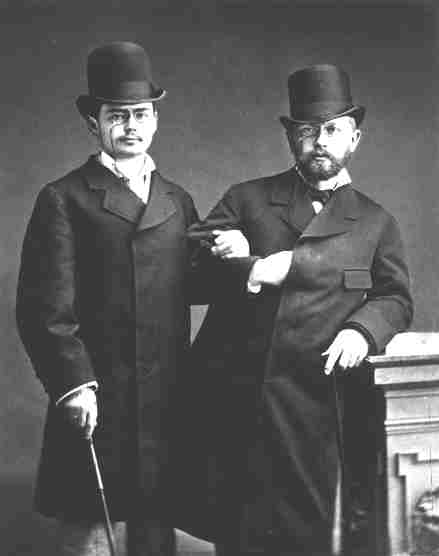
Tchaikovsky (right) with Iosif Kotek (left), one of his long-term partners Photograph of Tchaikovsky and Iosif Kotek, public domain -
But in Tchaikovsky's time in Russia homosexuality was tolerated but frowned upon, and so everyone willingly ignored his, most especially his wife, whom he originally met as a wealthy musical student of his, and who became totally infatuated with him.
-
How infatuated? This is how she described the early days of their marriage, when Tchaikovsky was mentally falling apart from the stress of keeping up the pretense:
-
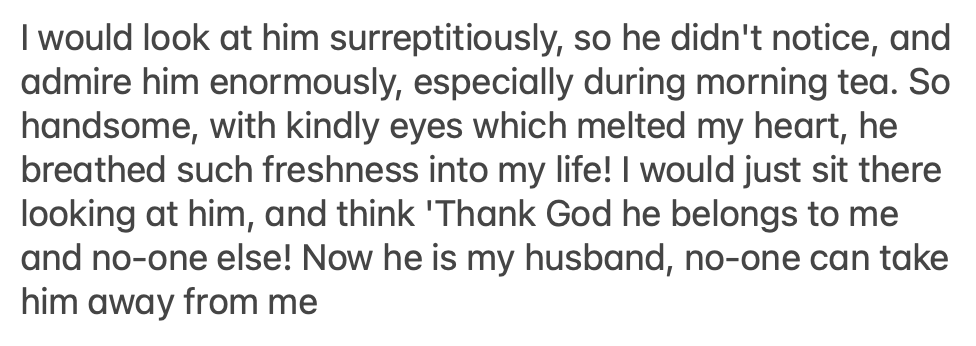
Antonina Miliukova's description of the early days of her marriage to Tchaikovsky, written while he was mentally falling apart from the stress of the pretense Antonina Miliukova's diary, public domain -
Within six weeks of getting married, Pete was completely sick of his wife, who was either oblivious or, for 19th century cultural reasons, pretended to be. He fled to Switzerland, where he stayed for a year, and got one of his brothers to inform her that their marriage was over.
-
They never officially divorced, which was legally convenient for Pete, and he sent her a regular allowance. But her life is a tragedy. After separating she had relationships with other men resulting in children but was unable to acknowledge them, and gave them up for adoption.
-
The final 20 years of her life were spent in an insane asylum. Opinions are divided as to whether she became mentally ill later in life or had been the entire time, with her apparent obliviousness to her husband's sexuality just one of many delusions. It was cruel, and sad.
-
The breakdown precipitated by the stress of Pete's fake marriage was just one of many. Pete was constantly having crises of various levels of severity. Everyone seems to have put up with them and supported him through them on the basis of his talent, but he sounds exhausting.
-
Sometimes Pete's crises seem to have been dramatic explosions of his own devising, while other times they seem to have been mental illness, including depression. His family were his most constant source of support in these times, especially his brother, Modest.
-
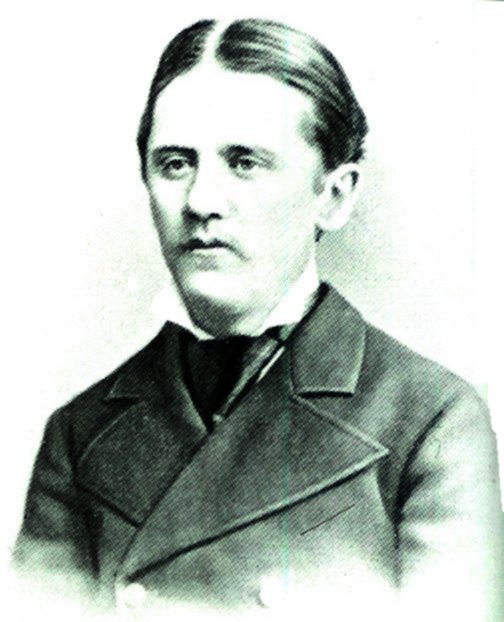
Modest Tchaikovsky, Pyotr's brother and his most constant source of support through his many mental crises Photograph of Modest Tchaikovsky, public domain -
Towards the end of his life Tchaikovsky was famous, and by the late 1800s that was accompanied by the beginnings of a celebrity culture that we would recognize today. He was invited to appear around the world, and lavishly entertained when he accepted.
-
He did not enjoy traveling, but also he was just kind of a drama queen. When in Russia he yearned to leave; whenever he was out of Russia he yearned to return. He alternately described Venice as the best place in the world and the worst place, and did the same with Paris.
-
Once while abroad he met "that giftless bastard" Brahms, and to his surprise quite liked him, writing: "I’ve been on the booze with Brahms. He is tremendously nice — not at all proud as I’d expected, but remarkably straightforward and entirely without arrogance."
-
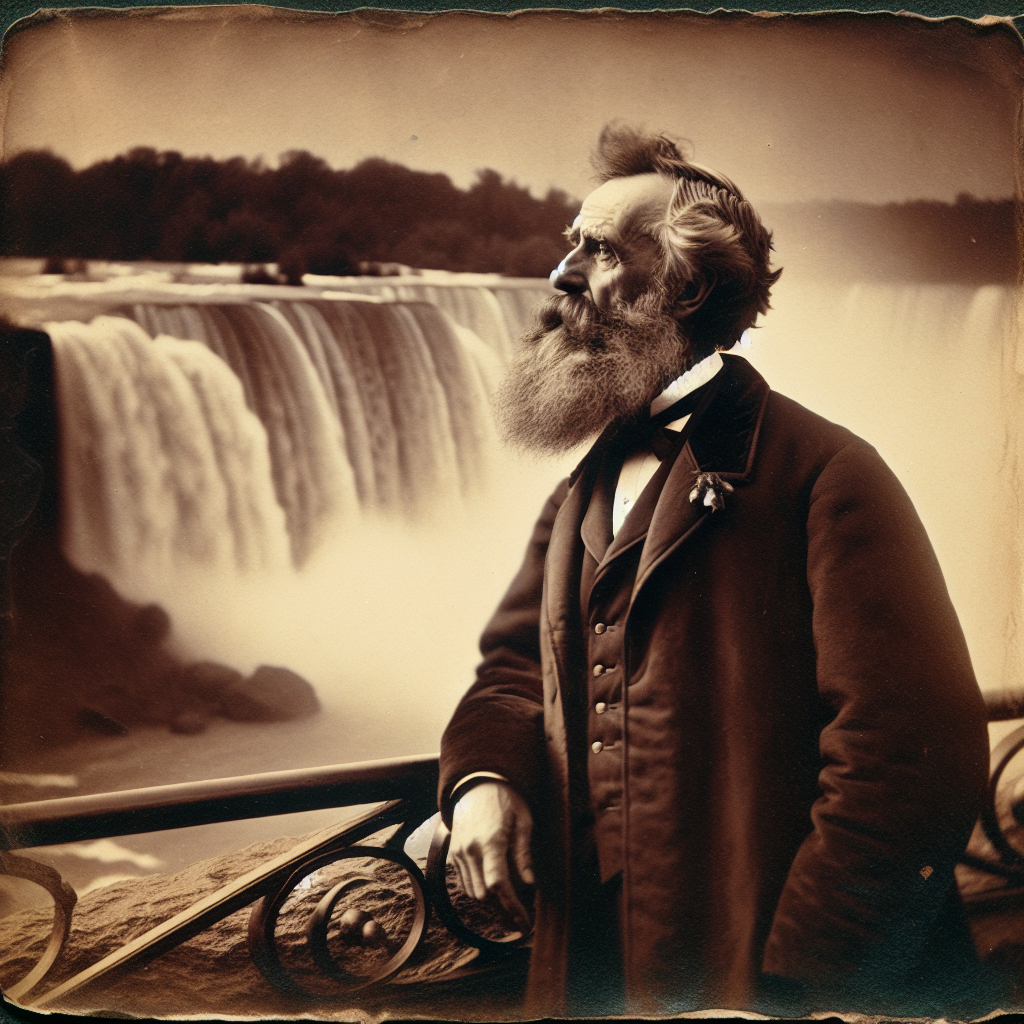
He also visited the USA, where he was impressed. The hotels were fancy, the plumbing indoors. He was also curiously impressed by his tourist visit to Niagara Falls, writing "The beauty of the waterfall cannot be described, because such a thing is difficult to express in words."
-
His visit to North America was otherwise pretty overwhelming for him; he was a charming and sociable man but constant adulation and hero worship exhausted him. He did not really enjoy being a celebrity and constantly on display.
-
Towards the end of his life he developed a deep emotional, possibly romantic relationship with his nephew Vladimir, 30 years his junior, whom for reasons unexplained he called "Bob". It was strange and more than a little creepy.
-
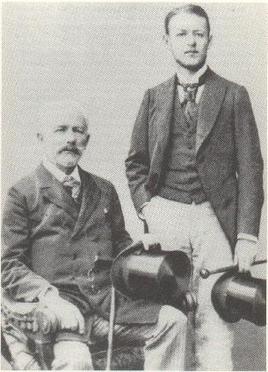
Tchaikovsky (seated) with his nephew Vladimir Davydov, whom he called "Bob" and with whom he developed an intense emotional bond in his later years Photograph of Tchaikovsky and Vladimir Davydov, public domain -
Tchaikovsky died aged 56 of what has been repeatedly described as suicide but was probably just cholera. His legacy is secure: some of the most famous and beautiful music of all time poured out of his strange, tortured, neurotic, brilliant mind.
-
But what I'm taking away is that he was just a really nice, kind of weird guy, on the booze with Brahms, weirdly enamored of a waterfall, making catty remarks about other composers and being very, very gay at all times.
-
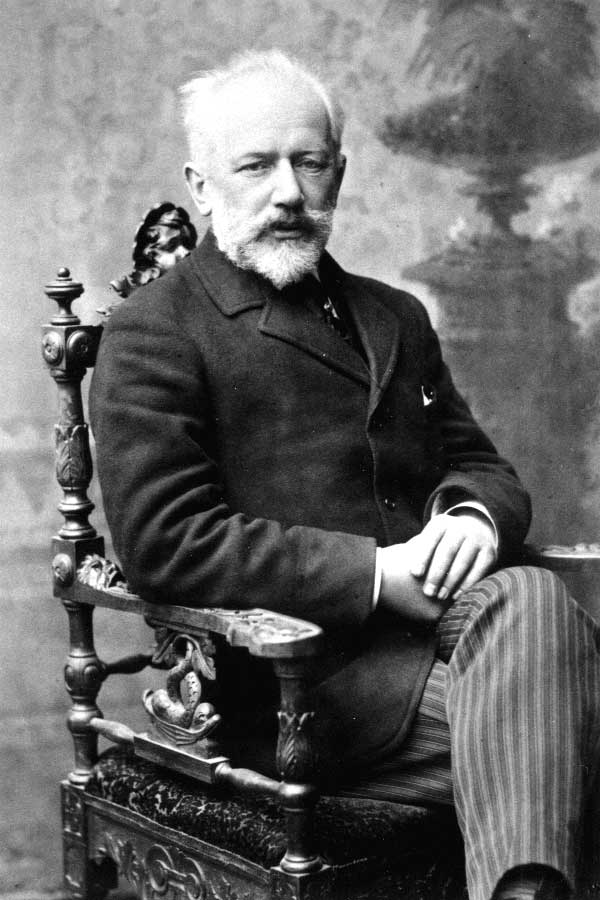
Photograph of Pyotr Ilyich Tchaikovsky in his later years Photograph of Tchaikovsky, public domain
- Previously: Karl Marx
- Next: Beatrix Potter
- Full list
Text and images copyright © 2020-2023 Laurie Voss
except where indicated
except where indicated